The inaugural Santa Cruz PyTorch Meetup – PyTorch
Featured projects


TL;DR
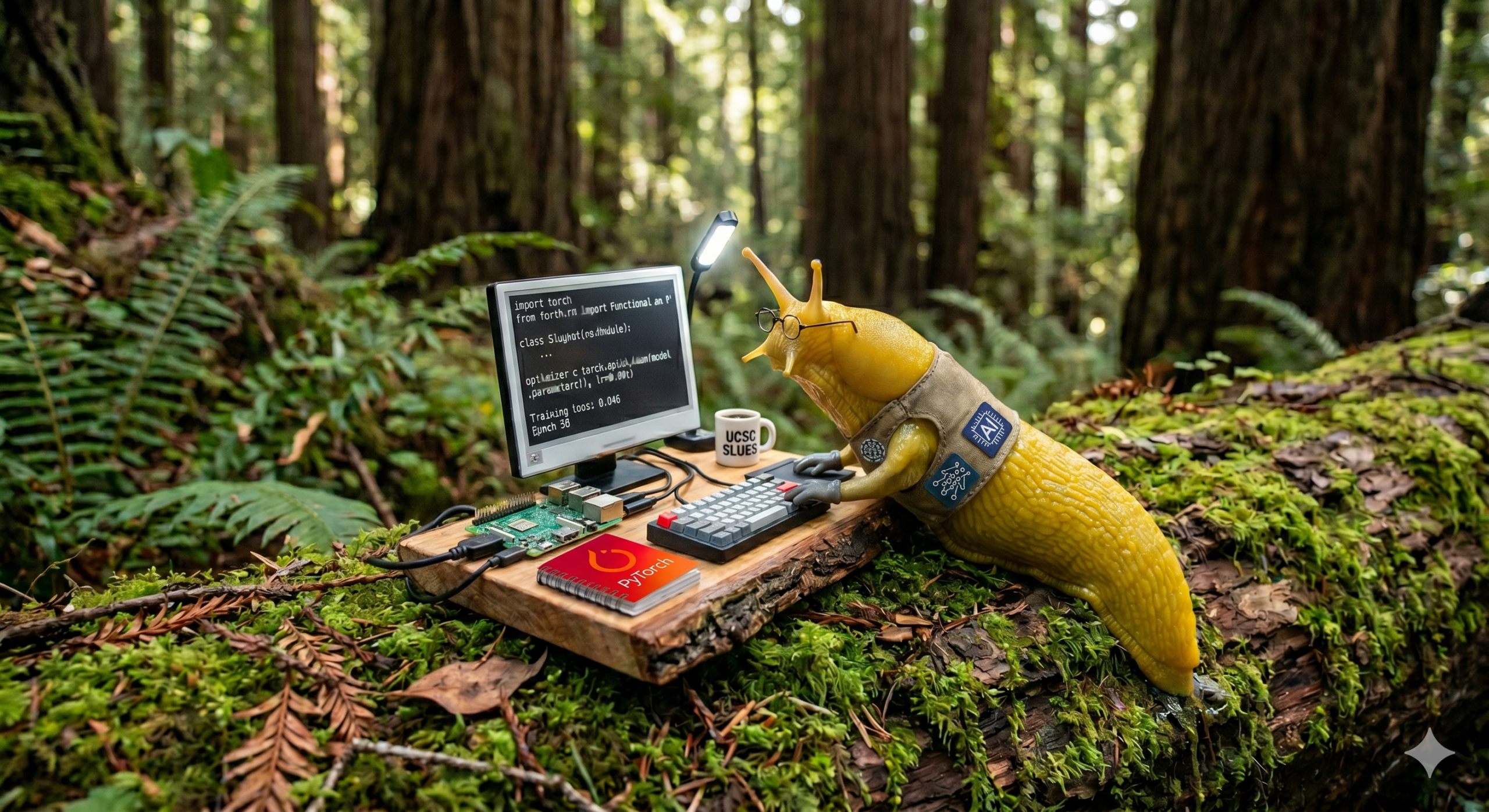
The inaugural Santa Cruz PyTorch Meetup brought together 45 local engineers, students, and leaders for GPU/CUDA talks and lightning presentations on chemistry, plant health, and autonomous driving – demonstrating how easy and impactful it is to launch a low-key, welcoming PyTorch community in your own area.

One of the great parts about being the lead for the Red Hat Open Source and AI Programs Office to the PyTorch Foundation is I get a front seat view to all the exciting activity in the community. One of the most impressive (and growing) developments is the PyTorch Meetup groups popping up all over the globe.
Living in Santa Cruz California I am “Silicon Valley adjacent” and there is almost too much activity “over the hill”. Getting over the mountains to the activity, while relatively close as the crow flies, is not the easiest. But, by being so close we actually have a thriving tech. community with down to earth people who appreciate being closer to Nature and a slightly slower, more affordable lifestyle.
With this background I thought, “Hey Steve, we have a major research university and a great tech. community, let’s get a PyTorch Meetup going here.”
What I hope you get from this post
I have a twofold purpose in writing today’s post:
- Fill you in on what was covered at our first meetup – tl;dr it was a great session, especially for those first diving into AI and PyTorch
- Inspire you to start a PyTorch meetup in your local area. It doesn’t have to be big, it doesn’t have to meet every 2 weeks, and it doesn’t have to be focused on low-level PyTorch or those directly contributing to the code base.
PyTorch has come a long way from being an internal Meta project with a strong focus on basic research to the foundation of the modern AI stack. The breadth of contributors, both to doc and the codebase has grown considerably, broadening the capabilities and range of what PyTorch (and it’s ecosystem) can do. As a consequence, It is now used, either directly or indirectly, by almost everyone in the AI and ML space and I believe we should be celebrating and showing off all the wider work PyTorch makes possible.
How our PyTorch Meetup came to be
Red Hat, true to our upstream first roots, wanted to continue to grow PyTorch’s broader community – more skill levels and more geographies. I have been to a few meetups in the Santa Cruz area, and met with various students at faculty at UCSC, and I have always been impressed with the skills and perspective that comes from being close to the tech epicenter yet staying just a bit outside the bubble.
Another key factor was that UCSC has an active and involved OSPO office that had worked with my team before. So when the UC Open Summit happened this Spring in Berkley I made sure to attend and try to touch base with some of the UCSC OSPO staff. Sure enough, once I met with Stephanie Lieggi, my co-organizer, and told her about my idea, she was excited to work together and we almost immediately kicked off planning. They contacted some of their people and I contacted some of my people, we got some food and they got a venue and parking – let the meetup commence!
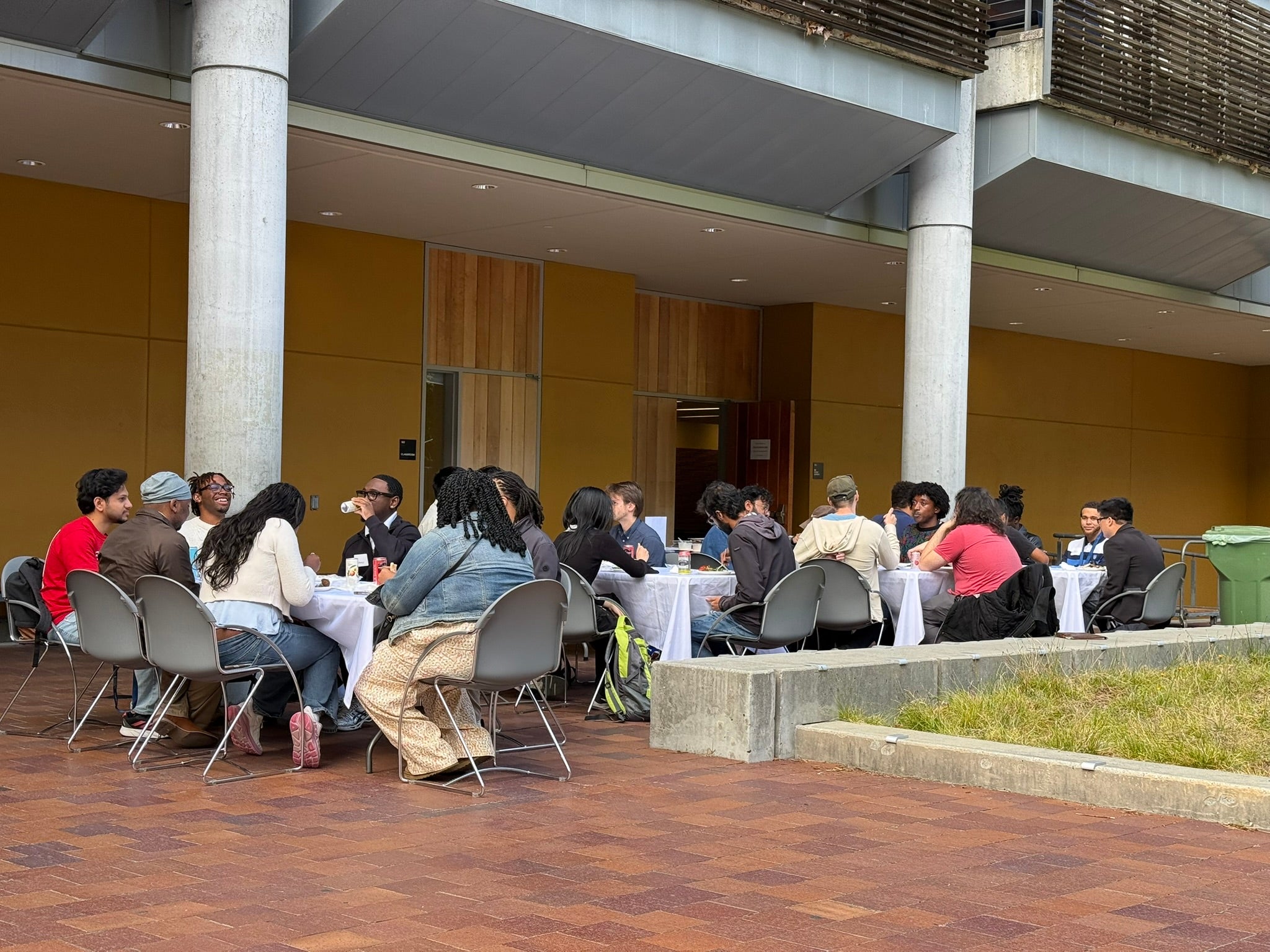
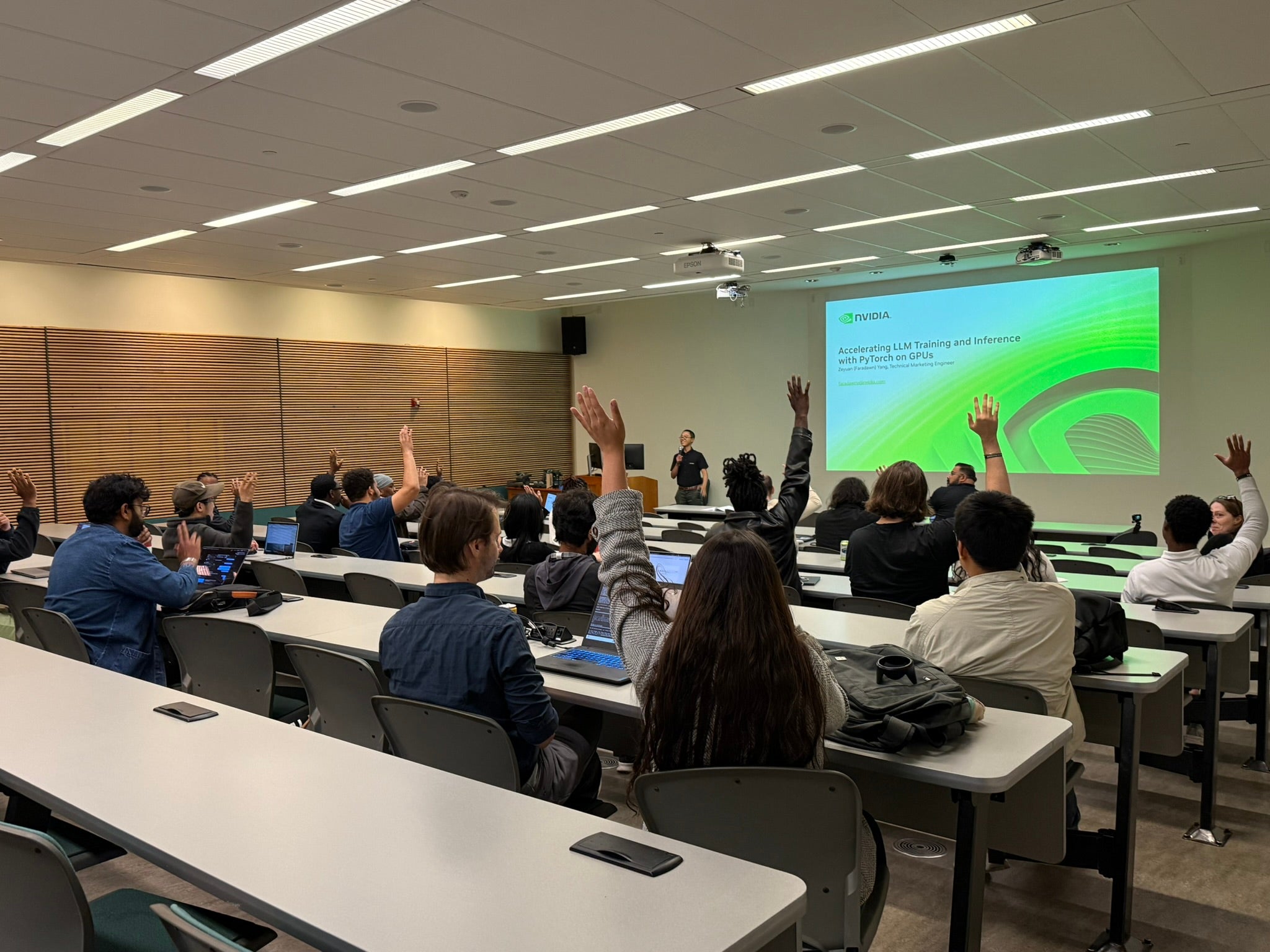
We had about 45 people attend the first meetup and we had the talks in a lecture hall in one of the engineering buildings. We had a wide range of people show up with some professional engineers from the local community, some business leaders, some graduate students, and rounding out the group were undergraduates there on summer internships. The weather was gorgeous, which is typical for Santa Cruz in the non-rainy season, so we served Mediteranean dinner outside in the courtyard. There was also some swag giveaways and, as always, the most popular items were STICKERS!!
The successful first meetup
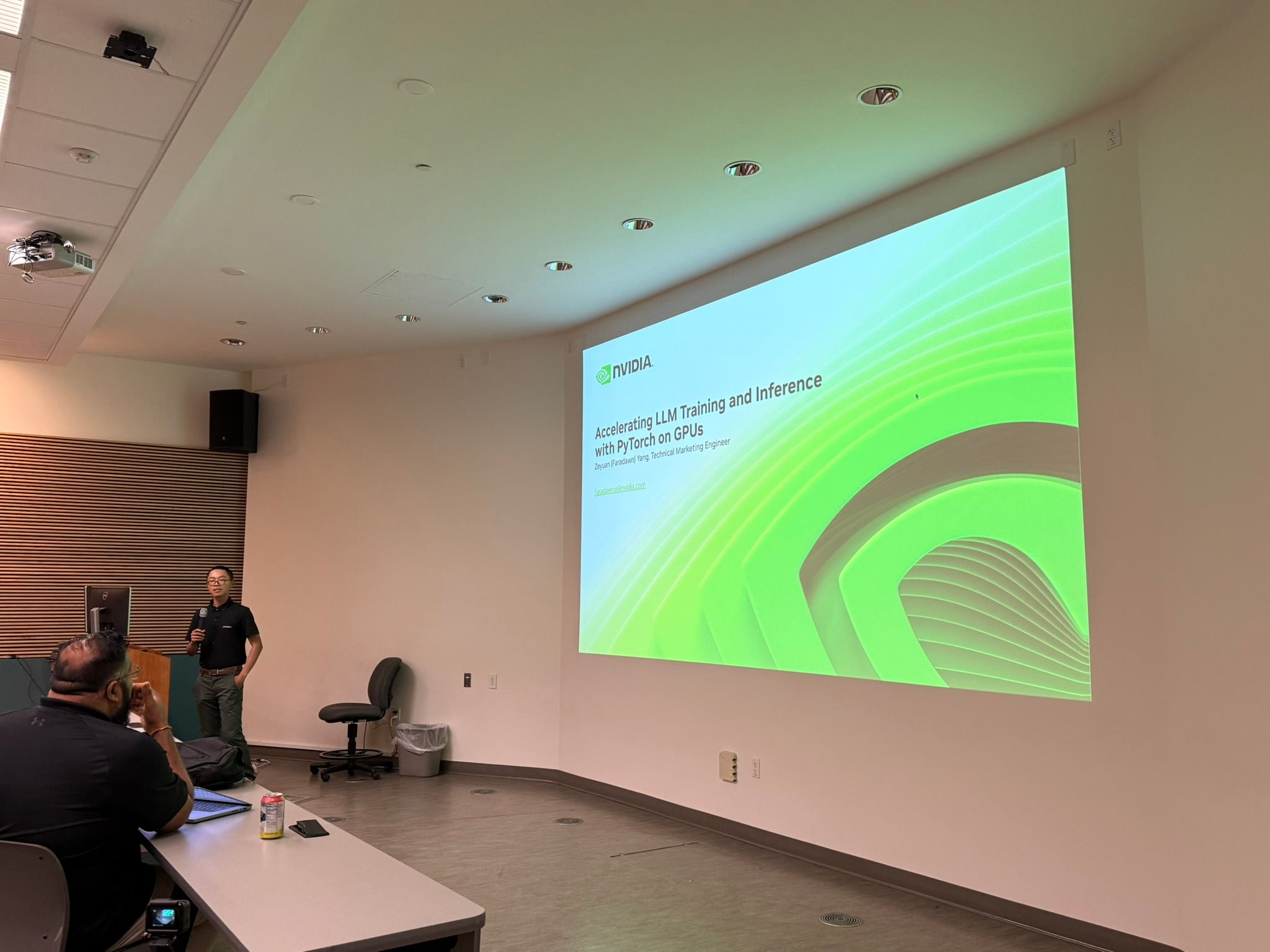
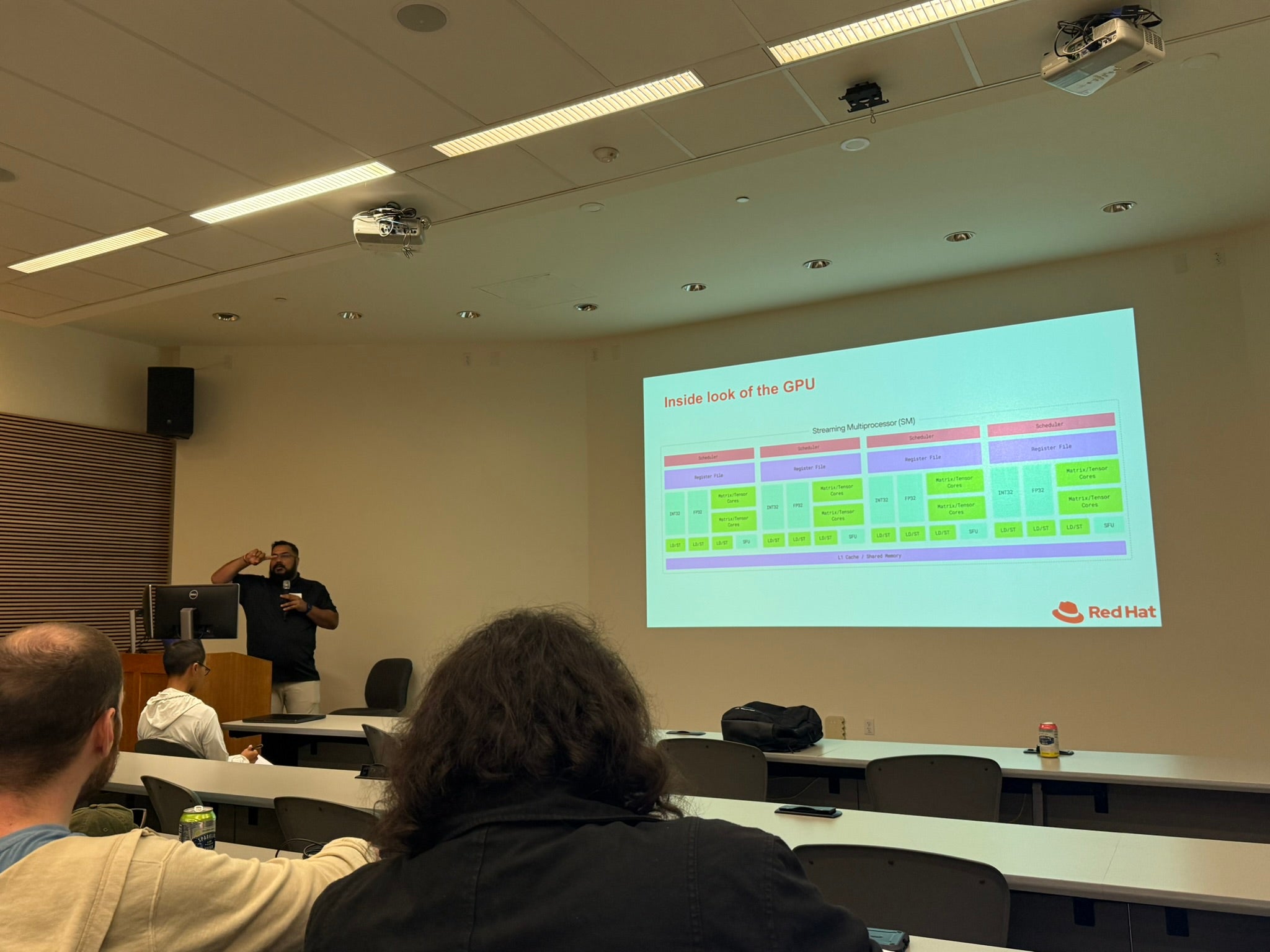
The evening began with a really well done talk by Faradawn Yang from NVIDIA, where he focused on teaching us the different parts of the GPU. His approach was something I had not seen before. He started with basic matrix math operations and how these are bread and butter for CUDA cores. Then he helped us understand how Tensor cores are used to group higher level matrix operations, thereby avoiding overhead and speeding up the operations. He even helped explain which parts are used in the forward-pass and back-pass for inference versus training.
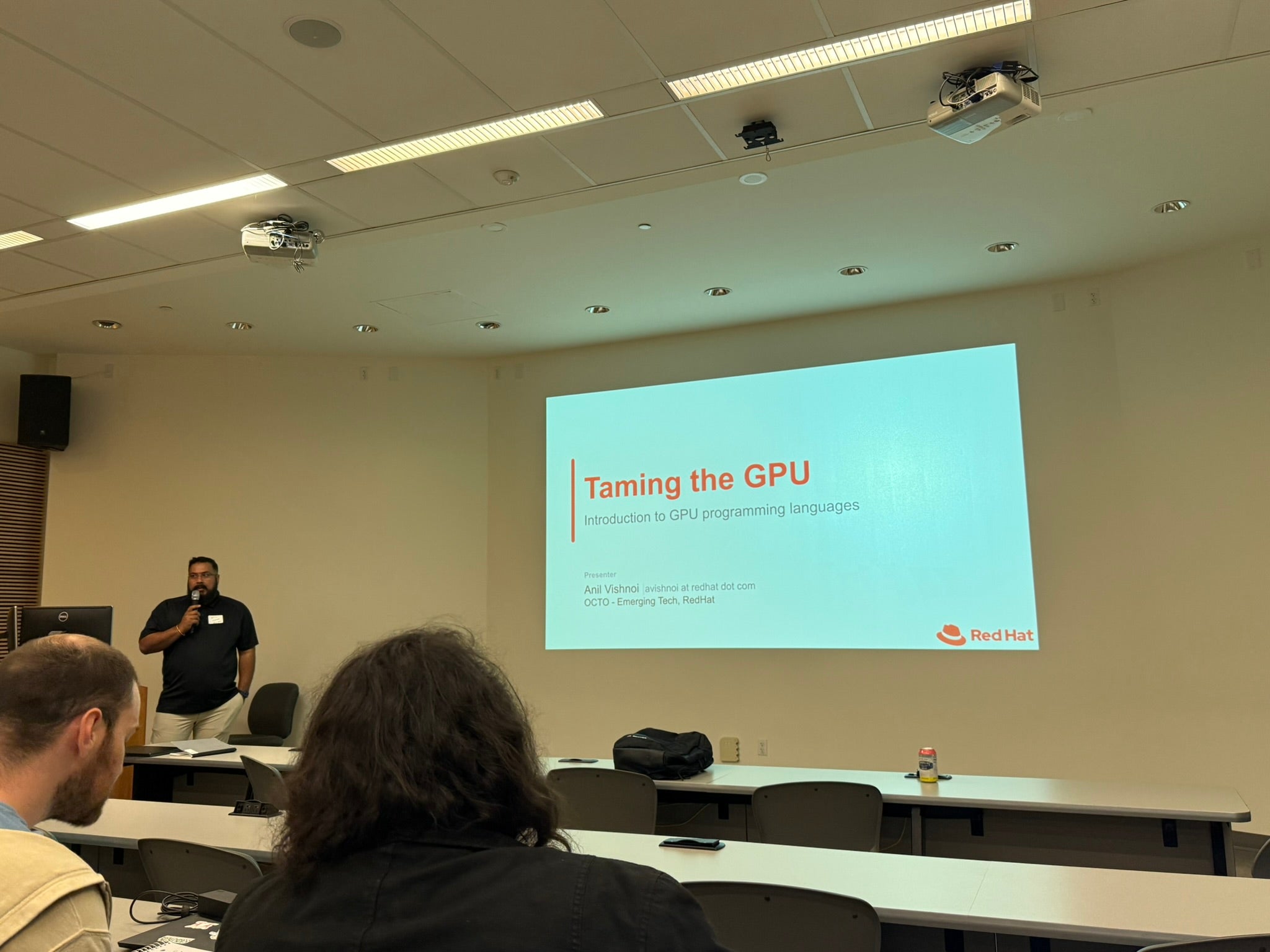
Faradan’s talk turned out to be a great introduction for the second talk by Anil Vishnoi from Red Hat. Anil’s talk was about programming for the GPU and for PyTorch Kernels in particular. First he helped us understand how the CPU and GPU differ in their architecture, threading, and overall model of execution. He gave an introduction to the patterns you needed to be aware of when working with GPU, how the type of operation was important, and tips on getting started with the work.
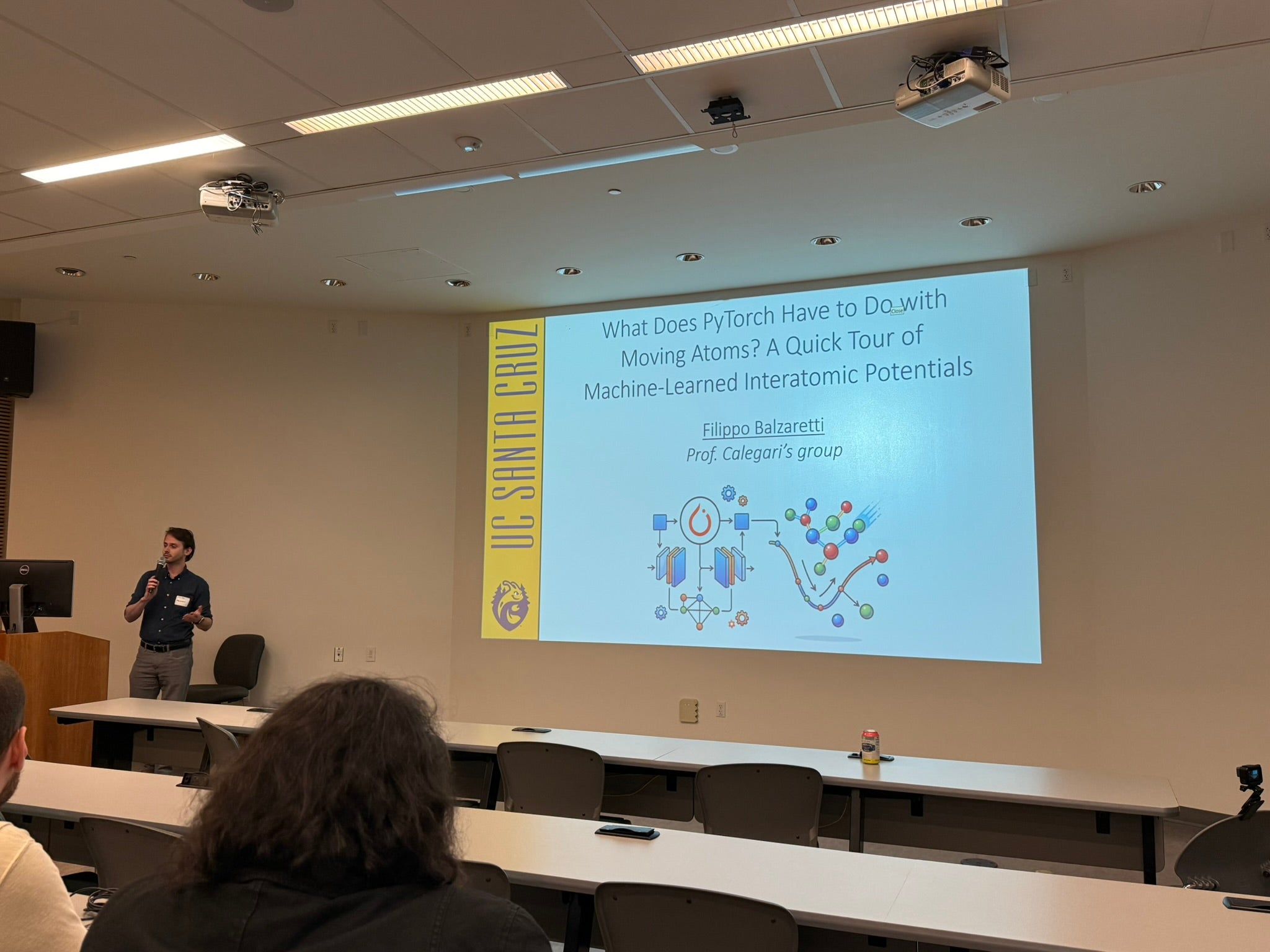
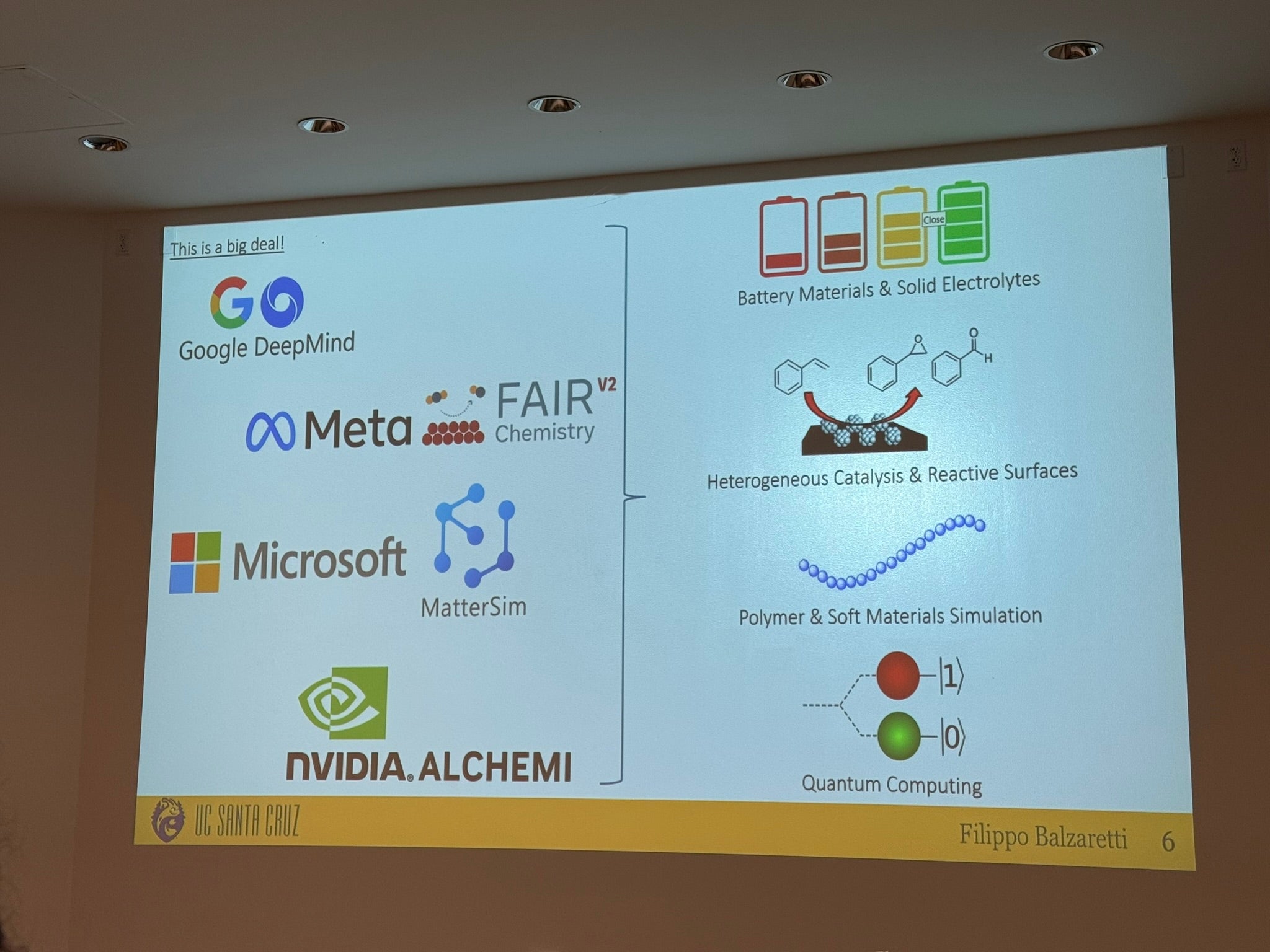
To wrap up the evening we had 3 lightning talks by speakers associated with UCSC. These speakers did a great job of demonstrating the reach and ease of using PyTorch and AI with modern stacks. The first was Filippo Balzaretti, a chemistry PostDoc, demonstrating how PyTorch could be used to approximate interatomic potentials. There are existing analytical and statistical solutions to understanding the forces but they did not scale well and become unsolvable in human relevant time. By using neural networks in PyTorch they are able to simulate much larger systems and successfully predict the properties that mattered to them. It was interesting to see how this has broad applications from batteries to quantum computing and is supported by most of the large AI labs.
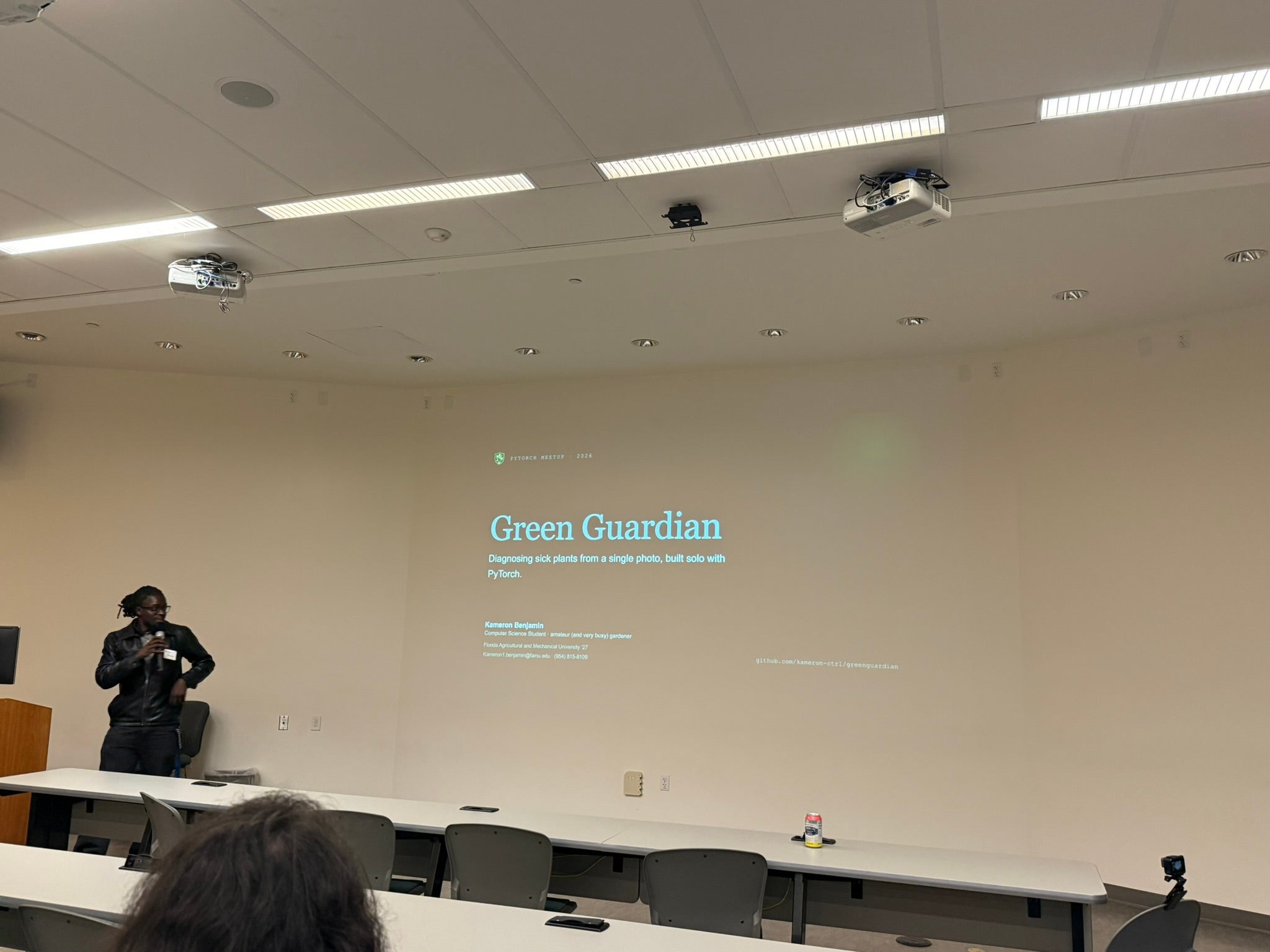
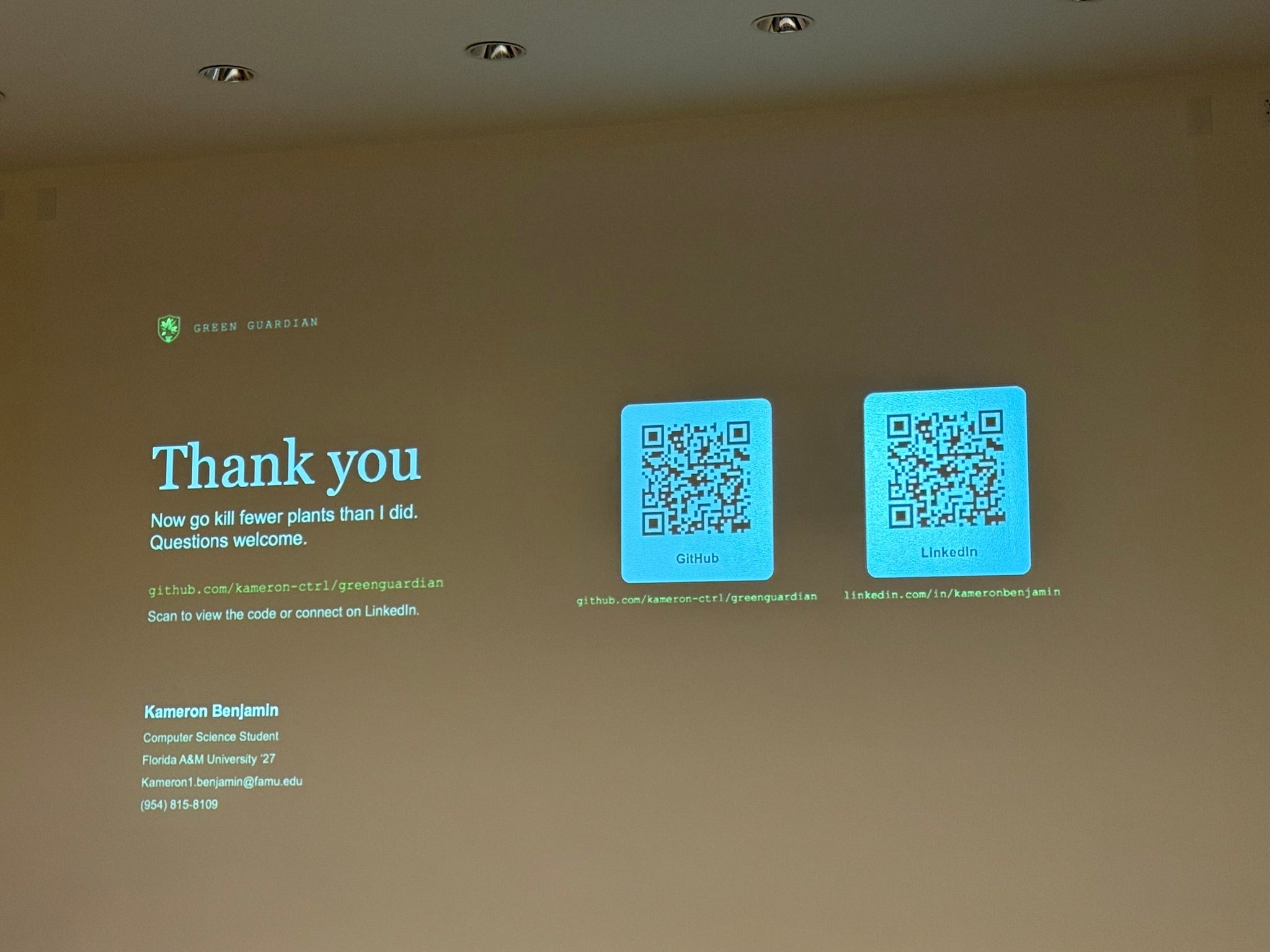
The next talk was by Kameron Benjamin, an undergrad at Florida A&M University, and it had a special place in my heart as an ecologist and someone who loves computer vision. He has a busy schedule and he was noticing his house plants were starting to get sick. So, in the best open source fashion, he scratched that itch and made a computer vision based AI application to diagnose his plants based on pictures of the leaves. He built Green Guardian and he got bonus points for giving us a live demo of the application in action. It was great to hear his voyage, using the resources on the PyTorch site and many tutorials throughout the internet to build this project on his own.
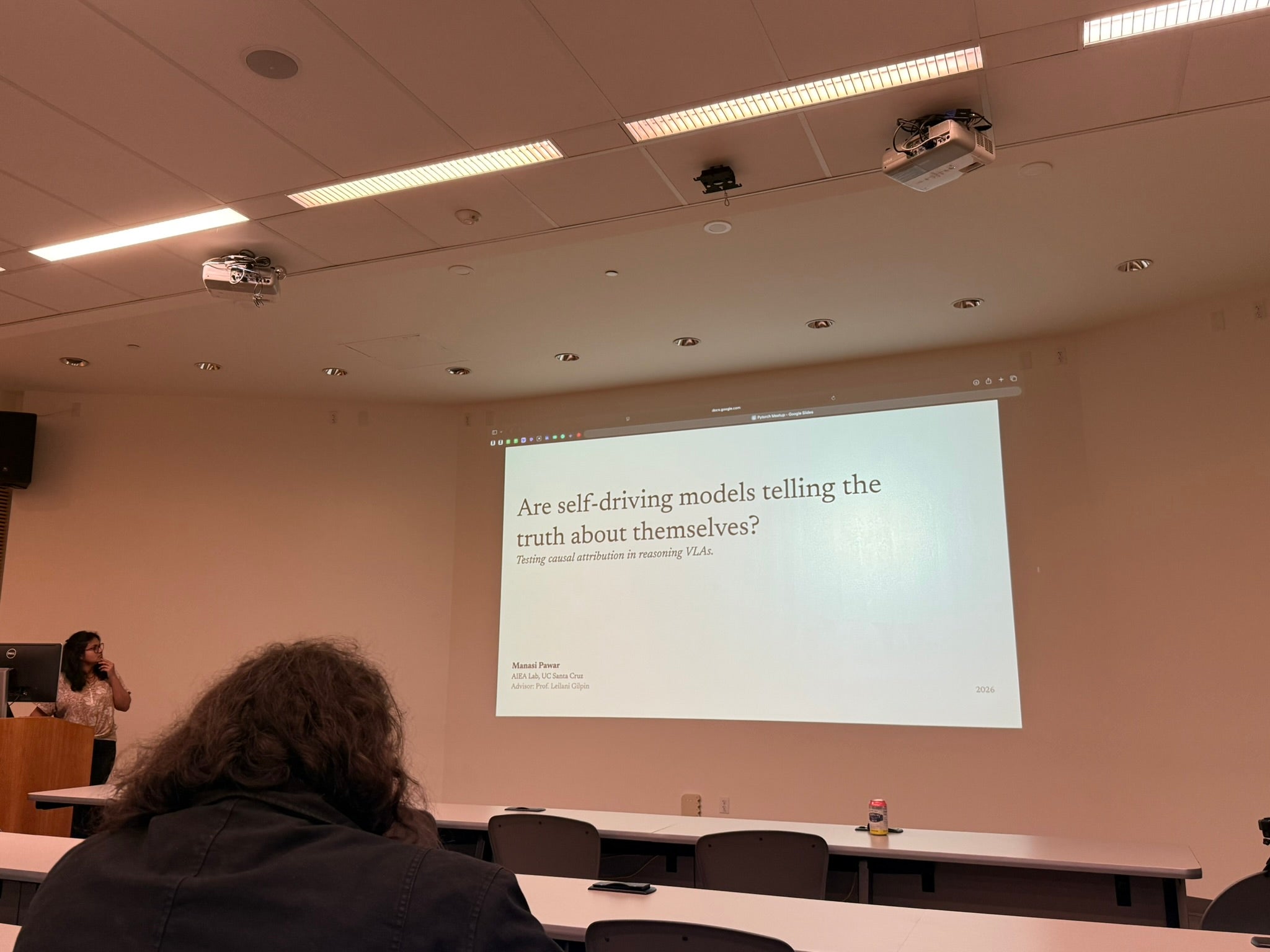
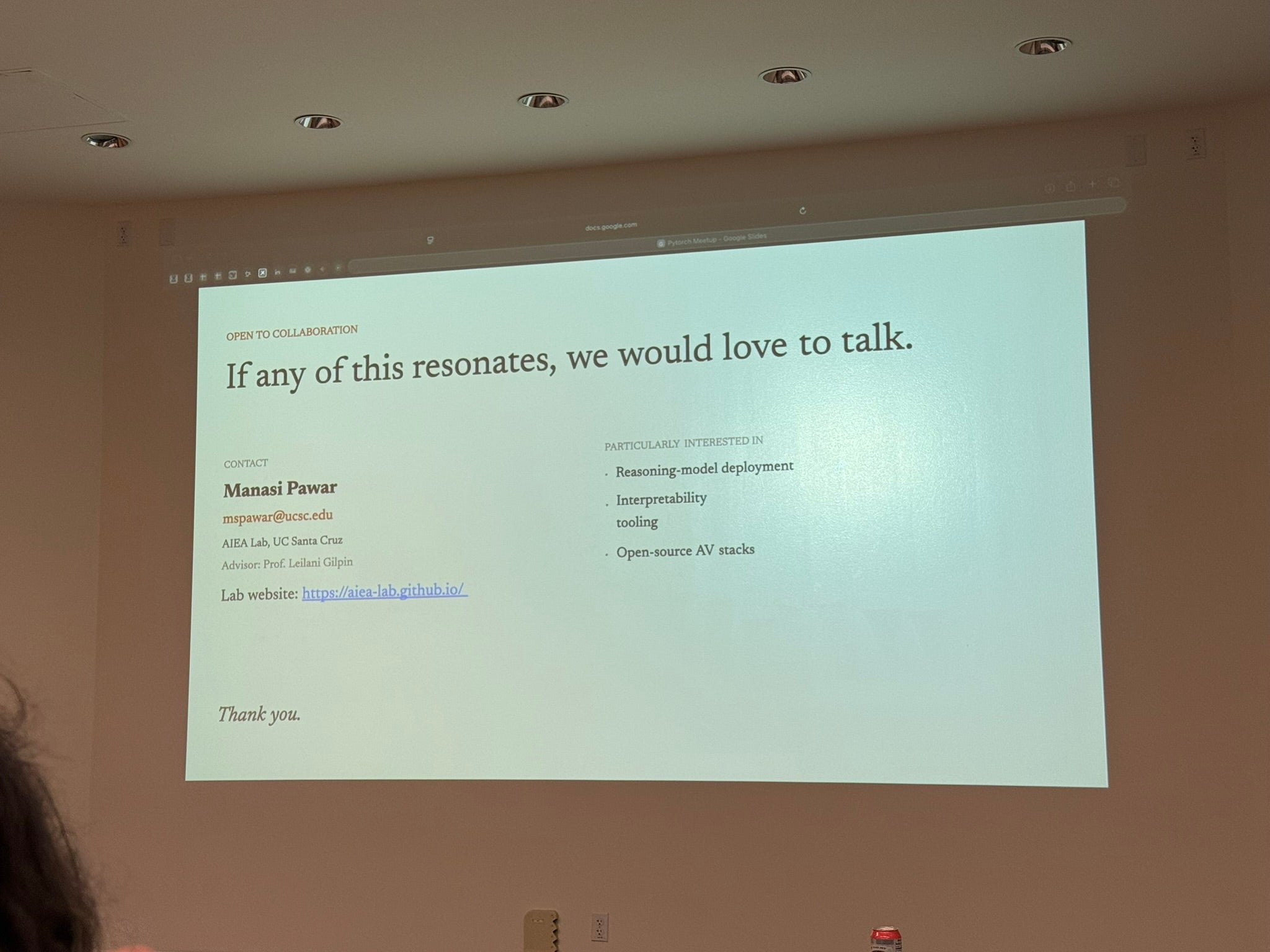
Bringing us home was Ph.D. student Manasi Pawar, whose research focuses on Visual Language Action models. The focus of her talk for the evening was “how much can we trust output reasoning traces from these models for why the model chose a particular action”. She is focused on their use in autonomous vehicles and so the ability to trust these traces has critical implications for model (and human) safety. It was intriguing to watch how they correlated actual driving traces with the reasoning from the model. Spoiler: just like we have learned in LLMs, you can NOT trust the reasoning traces to provide you accurate accounts for the output produced. Manasi gave a very convincing example where the reasoning trace explained why it took a right hand turn when the model had actually taken a left turn.
Join us at our upcoming PyTorch meetup
Overall it was not only an informative but entertaining meeting as well. It was great to see AI practitioners from throughout the Santa Cruz community talking and sharing their knowledge. We already have our next meetup scheduled and our first speaker lined up with more to come. We will have Rob Timpe from OpenTeams speaking about using and debugging Torch.compile.
With the active tech scene in Santa Cruz we are looking to get speakers from local companies such as Joby, Looker(Google), or Fullpower-AI. We are also thinking about exploring different venues such as Pacific Workplaces, CitizenSpace, Cruzio, or maybe even one of our public libraries.
If you have a suggestion for a topic, want to be a speaker, or know of a good location we would love to hear from you. Drop a note on our Luma calendar page or contact me directly.
Wrap up
Our first meetup was a good start, but like I said in the beginning, one of the main goals of this post is to see this energy replicated. If you’ve been on the fence about starting a PyTorch community in your own backyard, consider this your nudge to go for it. You don’t need a massive budget or a rigid structure to make a difference:
- Start small: You don’t need a massive crowd to have a great, high-impact conversation.
- Leverage your strengths: Whether you have a university nearby or a local tech scene, build on the existing pockets of curiosity in your area.
- Keep it low-key: The best meetups are the ones that feel welcoming and low-fuss, not overly formal or intimidating.
- Broaden the scope: Remember that PyTorch touches almost every corner of the modern AI stack – there is always something interesting to explore. For inspiration look at the range of PyTorch Foundation hosted projects and the even broader use cases supported by member of the PyTorch Ecosystem.
- Most importantly, have fun: Technology is better when you explore it together.
We’re thrilled with how our inaugural event turned out, and we’re already looking forward to growing this community. If you are local, we look forward to you joining us for the next one. If you can’t make it to our then no time like the present to start your own! Let’s keep building.